
“Magician of Ramen” Takes on Local Chinese Eatery!
《Japan Ramen Guide/日本拉面指南》
Menkui Wanderer(麺喰ワンダラー)
Column 2025.12.17 “Magician of Ramen” Takes on Local Chinese Eatery!
Dinner: Dinner Soy Sauce Ramen (¥1,000) / Appetizer Ramen (¥600)
Next Day Lunch: Sashiroku Salt Wonton Ramen (¥1,400)
Opening October 23, 2025.
Wow! The owner of the popular “Konmen(魂麺),” which has been in Motoyawata for 21 years, has made a surprise opening in the Jonan area(South Tokyo). And it’s not a restaurant produced or a second brand; the owner himself is in the kitchen. An article unravelling this mystery was published in June 2022. He opened a “Machi Chuka(町中華;local Chinese eatery)” shop in “Ramen Walker Kitchen.” According to an interview at the time, “Thick broth is popular these days, and it’s incredibly delicious. But if I were to eat Machi Chuka every day, I’d go for it. That’s because it doesn’t tire my stomach out.” People who can handle heavy broths and strong flavors probably don’t mind them, but I’m a heavy drinker, so I have a weak stomach. Food really needs to energize me. Local Chinese eatery have a light, mild flavor. Eating them makes me feel energized.”
He also said, “Local Chinese eateries have long been a part of the Japanese dietary habit, an indispensable part of it. It’s Japanese culture. I’d be happy if people knew about them so that this part of it wouldn’t disappear.” He’d been saying for a while, “I want to open a local Chinese eatery someday,” and finally, he made it a reality.
He was originally nicknamed the “Magician of Ramen,” and has created over 500 ramen recipes. I’m sure his other dishes would be delicious too.
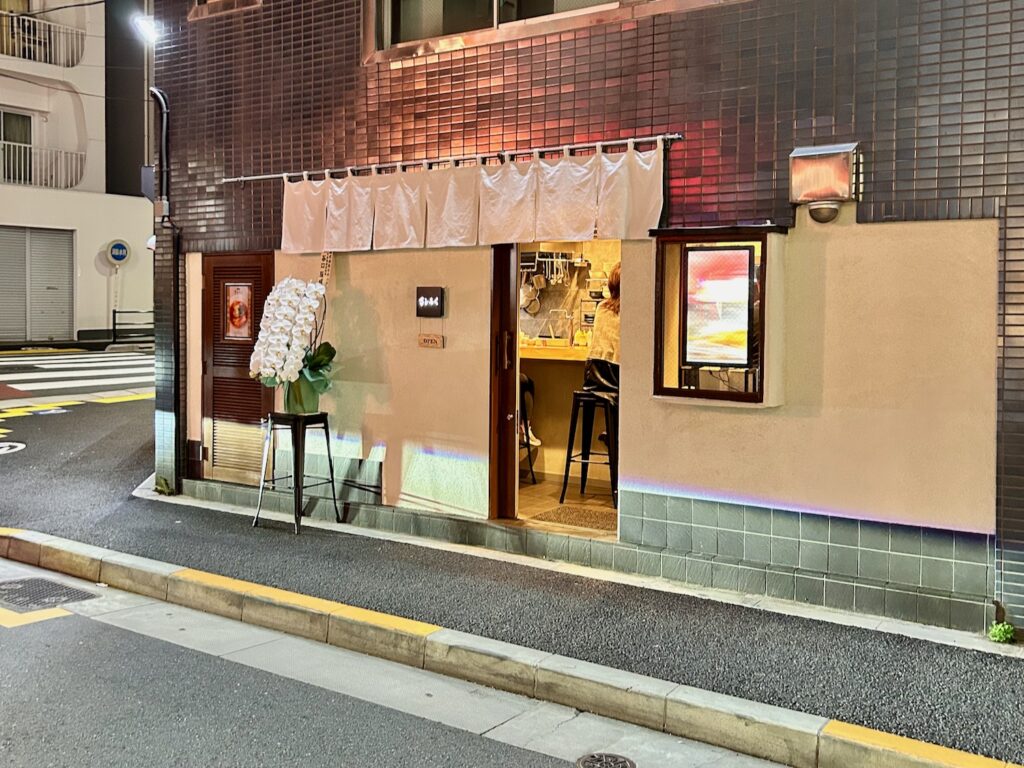
The unique feature of this shop is that it’s a “ramen specialty shop during the day, a standing local Chinese eatery at night.” There are only 8-9 seats at the counter. In the evening, there’s a two-hour limit of one drink, one food, and a seating arrangement. Seats are available for those who need them. They also serve ramen in the evening, but it’s a typical local Chinese dish, and the flavor and volume are different from the lunchtime menu. So, I went first to try their evening noodle menu.
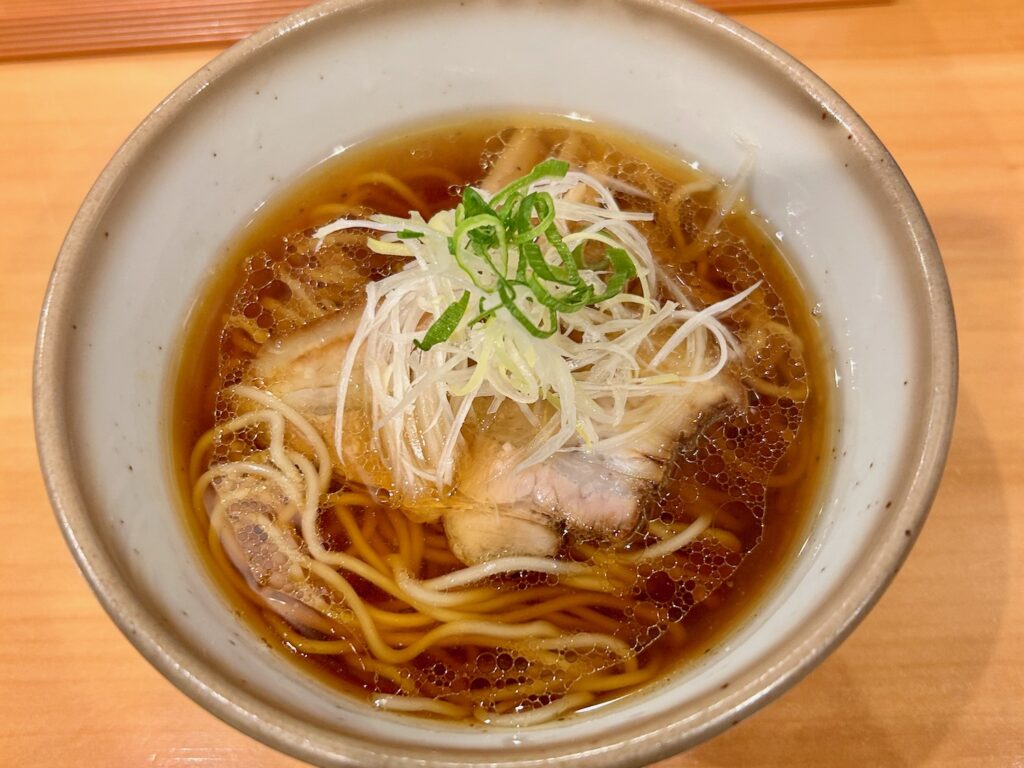
Having eaten at various places elsewhere, I listened to the owner’s story over a lemon sour, saving the a la carte dishes for another time and focusing on the noodle dish. The soup is a simple chicken base, as is also used as a base for Chinese cuisine. The thin noodles are topped with char siu and green onions. Most local Chinese restaurants offer full-sized noodle dishes, and few offer this type of final ramen in half portions. However, I’m happy that this “basic” ramen is half-sized. The flavor is mild, but still delicious.
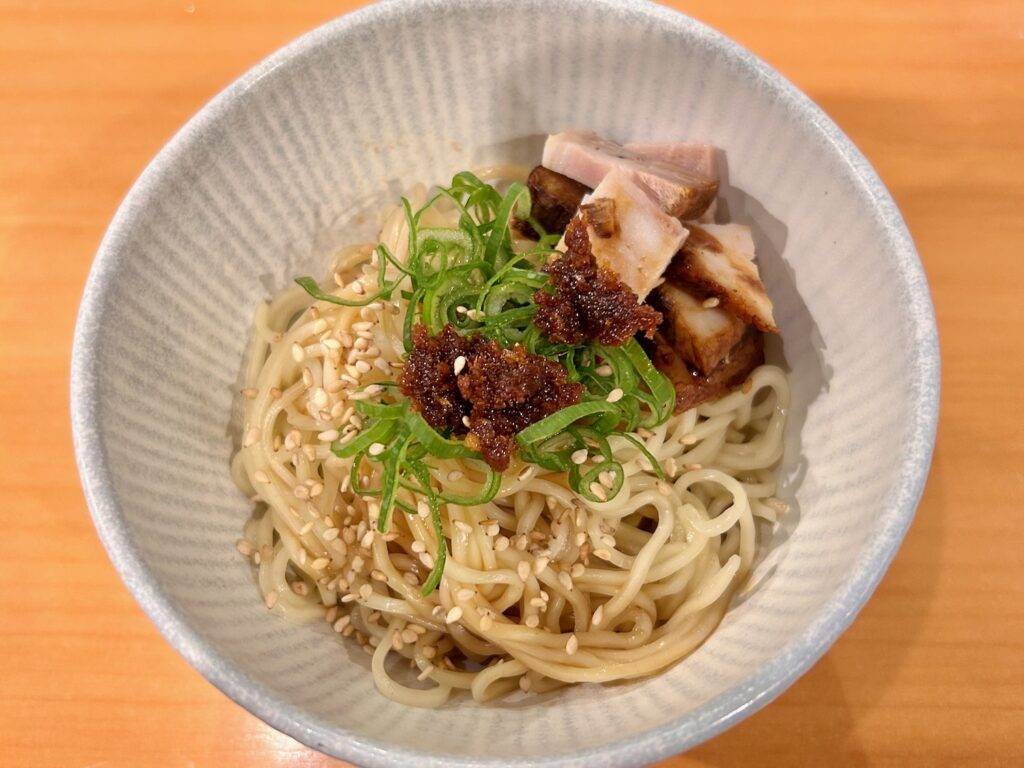
This dry noodle dish is based on the “Koumen(光麺)” noodles from “Kazusan Tonmin(13湯麺),” where the owner trained. The noodles are mixed with sauce, sesame seeds, green onions, shredded pork, and shacha jan sauce(沙茶醤). This noodle dish is more of a snack than a final dish. It’s a masterpiece that makes you think, “The other dishes must be delicious, too.” It’s simple, yet incredibly delicious.
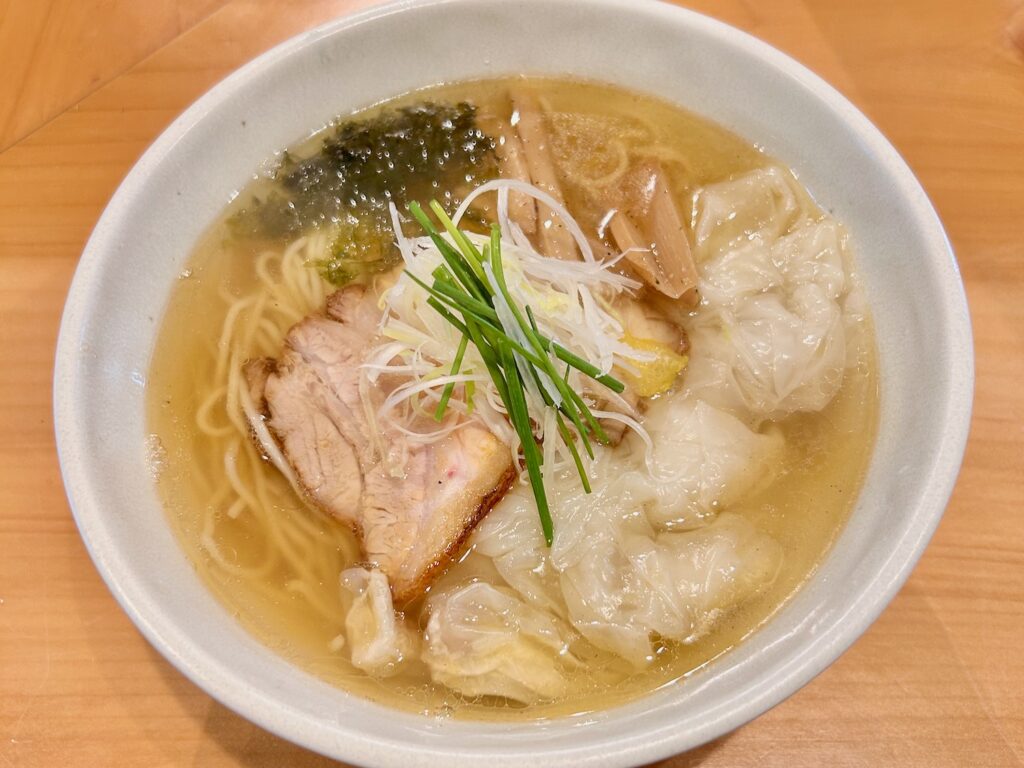
I returned the next day for lunch.
The lunchtime soup was a light, clear broth of meat and seafood, based on grilled flying fish, made with whole chicken and Sasuke pork. (The soy sauce flavor uses a special soy sauce sauce branded by Sakae Soy Sauce from Kakegawa City, Shizuoka Prefecture, and Suehiro Soy Sauce from Tatsuno City, Hyogo Prefecture.) The difference between the soy sauce and salt flavors is the addition of sprouts and yuzu peel. The noodles are thin and straight, custom-made by Kishuya Seimen (Shinjuku) using a blend of “Sanuki no Yume” (wheat flour used for udon). The wonton wrappers are extremely thin and are sourced from Sakata’s popular, long-established shop “Mangetsu(満月),” and the filling is accented with a melt-in-your-mouth texture.
The flavor makes you want to come back just to try the soy sauce ramen, and return in the evening to try a variety of dishes.
I also heard about the shop’s name, “Sashiroku,” but since it’s a play on the owner’s child’s name, I’ll refrain from going into details as it would involve personal information.
I’d like to go there in the evening with a group of people, share a variety of dishes, and finish off with ramen.
“Machi Chuka Sashiroku(町中華 さしろく)” (Shinagawa Ward, Tokyo / Gotanda Sta.)
Official Information
1-23-9 Higashi-Gotanda, Shinagawa Ward, Tokyo 141-0022, Win Building 1F
Autor of this article
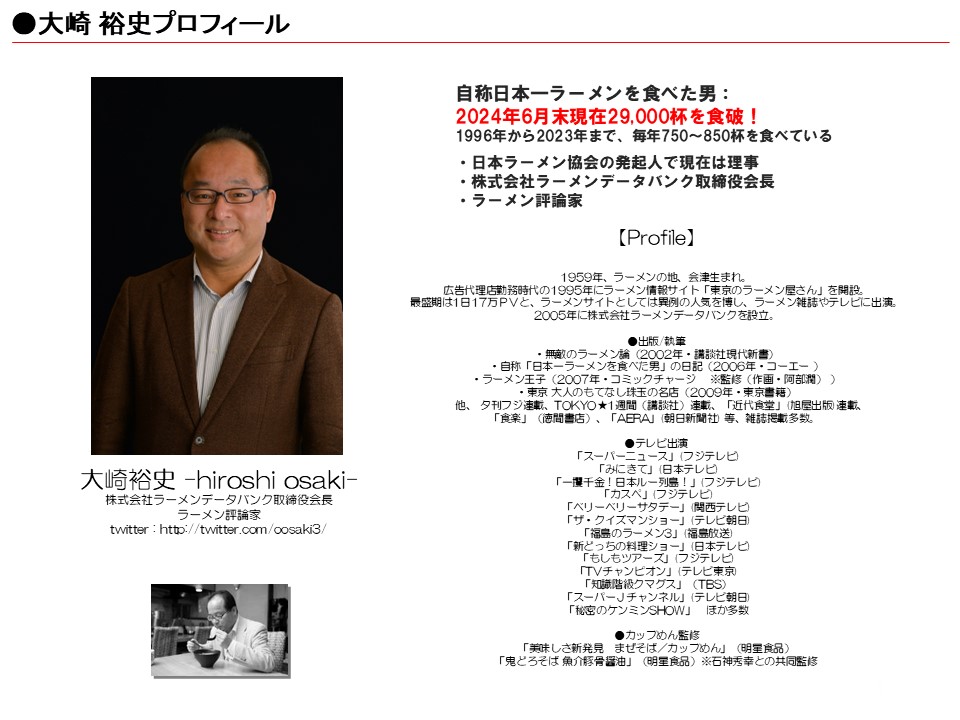
■Hiroshi Osaki (大崎 裕史); Chairman of the Board of Directors of Ramen Databank Co., Ltd. One of the founders of the Japan Ramen Association. Executive Committee Chairman of the Tokyo Ramen Festa. Born in 1959 in Aizu, the land of ramen. While working at an advertising agency, he launched the ramen information site “Tokyo Ramen Shops” in 1995. Founded Ramen Databank Co., Ltd. in 2005. Became chairman of the board of directors in 2011. He has appeared in many magazines and on television as “the man who calls himself the man who has eaten the most ramen in Japan” (as of the end of June 2024, he has eaten about 14,000 ramen shops and about 29,000 bowls). His books include “Muteki no Ramenron” (The Invincible Ramen Theory) (Kodansha Shinsho) and “Nihon Ramen Hishi(Japan Ramen Hidden Story)” (Nihon Keizai Shimbun Publishing).